
7 Key Differences Between Power and Distribution Transformers
Many fail to distinguish between power transformers and distribution transformers, and thus often make wrong choices. If the wrong type is selected, not only will the project cost exceed the budget and the operating electricity consumption increase, but in severe cases, the transformers may even be burned out due to overload.
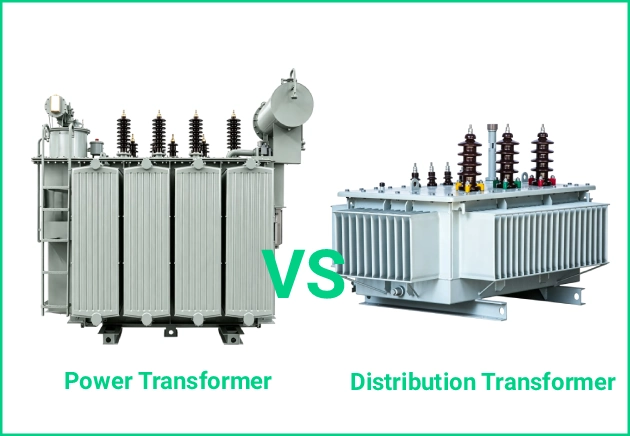
These two types of transformers have different functions in the power system and usually cannot be interchanged. This article differentiates the two transformer categories from 7 key dimensions and summarizes practical selection guidelines for engineering projects and import businesses.
What is a Power Transformer?
Power transformers are equipment that transfer electric energy between the generation and transmission networks. It steps up or steps down voltage for efficient long-distance power delivery.
They feature large capacity and high voltage levels (more than 35kV). They run under relatively stable, heavy loads and do not supply power directly to factories or households.
What is a Distribution Transformer?
Distribution transformers are the final equipment of power distribution networks. They convert medium-voltage power into low-voltage power (directly usable by end users). In distributed power generation scenarios, they are also used for stepping up low-voltage electricity.
Types of Distribution Transformer
According to different classification methods, the distribution transformer can be divided into below types:
| Classification methods | Type | Feature | Application |
|---|---|---|---|
| Insulation & Cooling Type | Oil‑Immersed Transformer | Cooling medium is transformer oil. It has high heat dissipation ability and strong environmental adaptability. | Ideal for outdoor use. Suitable for rural and urban lighting, and coastal or underground mine environments with harsh conditions. |
| Dry Type Transformer | Air cooling. No oil, high safety | Ideal for indoor use, such as shopping malls or data centers, or projects with higher safety level requirements. | |
| Installation location | Pole Mount Transformer | Small, lightweight, easy to install. | Usually used for rural power supply or lighting |
| Pad Mount Transformer | American type prefabricated substations. Compact structure, small in size, theft‑proof | Suitable for temporary electricity for construction sites and residential area electricity | |
| Packaged Substation | European type prefabricated substations. Easy for maintenance. | Suitable for projects with high power supply standards, such as commercial center and industrial centralized power distribution. | |
| Phase Structure | Single phase Transformer | Simple, small size, low investment cost. | Suitable for low‑power places, such as home lighting and street lamp. |
| Three‑phase Transformer | Complex, large size, high operating efficiency. | The mainstream choice for industrial and commercial power distribution project. | |
| Core Material | Silicon Steel Type | Traditional configuration; low cost; high operational reliability | High cost‑effectiveness. They can meet nearly all basic power supply requirements. |
| Amorphous Alloy Type | Low losses and low operating noise. | According to the OMEK POWER engineering team, its maximum rated capacity is 2500kVA. Applicable to projects with high requirements for loss and green low‑carbon projects. | |
| 3D Wound Core Type | Ultra‑low operating noise, high power supply quality. Theft‑proof. | Suitable for projects with high requirements for power supply quality, such as core areas of commerce or cities, hospitals, schools and other places. | |
| Working Function | Step Up Transformer | Mainstream core type. Reduce medium voltage to low voltage for end users. | / |
| Step Down Transformer | Make the distribution transformer work in reverse. Convert low voltage to medium voltage, and deliver electricity to the distribution network or other users | / |
Power vs. Distribution Transformer: 7 Key Differences
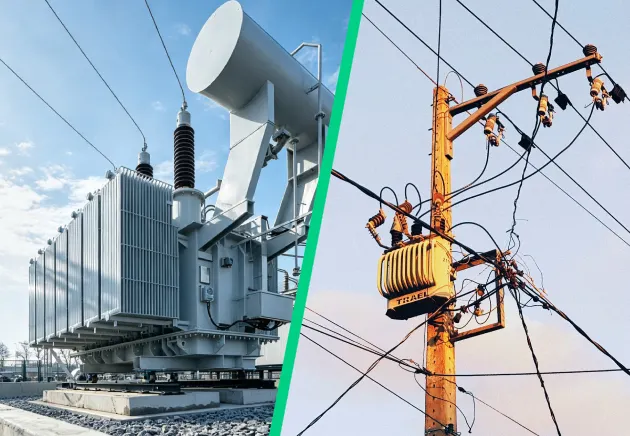
| Items | Power Transformer | Distribution Transformer |
|---|---|---|
| Design | High core magnetic flux density, compact windings; Thick insulation, often equipped with on‑load tap changer; Complex cooling system, large oil tank structure. | Low core flux density, focusing on reducing no‑load loss; Simplified insulation, using no‑excitation voltage regulation; Relying on natural cooling, the structure is compact and lightweight. |
| Voltage Levels | Transmission grids, high voltage levels(≥35kV). | Applied to distribution networks, medium voltage levels (1kV‑35kV). |
| Load Type | Relatively stable. Small load variation, more suitable for continuous operation at 100% full load. Low load loss. Usually equipped with on‑load tap changer. | Fluctuating, short‑term overload may occur. More suitable for 50%‑70% partial load. Low no‑load loss. Most are equipped with no‑excitation tap changers. |
| Efficiency | The equipment runs most efficiently when fully loaded. | The equipment runs more efficiently when lightly loaded or unloaded. |
| Size and Weight | Large and heavy. Example: Power transformer of 3150kVA, 3.3‑0.72kV. Its estimated dimension and weight: 2245*2282*2320mm, 6465kg. | Compact and lightweight. Example: Distribution transformer of 200kVA, 11‑0.4kV. Its estimated dimension and weight: 1105*880*1486mm, 1025kg. |
| Applications | EN: Power plants, high‑voltage hub substations, inter‑regional transmission grids. | EN: Residential districts, rural grids, commercial parks, small factories, distributed PV grid connection, terminal power supply. |
| Cost | Expensive. | Cost‑effective. |
| Maintenance & Lifespan | Complex and regorous maintenance. Standard design lifespan: 30~40 years. | Easy routine inspection. Standard design lifespan: 20~30 years. |
How to Choose the Right Transformer
To select the suitable transformer type, you could follow the steps below:
✅ First, figure out what your project needs. Decide if you need a power transformer for power plants and transmission lines, or a distribution transformer to supply power directly to end users.
✅ Next, based on actual requirements, confirm the electrical specifications, such as rated capacity, high/low voltage, frequency, connection group, winding material, and other key specifications. Meanwhile, consider the installation location (indoor/outdoor) and site conditions (environment temperature, altitude) to determine if the transformer need special design adaptations.
✅ Finally, based on the transformer’s expected load conditions and local market regulations, verify other necessary specifications.
By following these steps, you can initially determine the suitable type and specifications of the transformer for your project.
When to Use a Power Transformer?
– Power plant, substation, and long distance transportation under high voltage;
– Large capacity of electricity transform project;
– The project requires transformer continuous full load operation.
In our experience, the decision to use a power transformer usually depends on the power scale and actual application. If your project involves high voltages (≥35kV) or large power capacities, a power transformer is probably a better choice.
However, it’s necessary to make a thorough analysis of your specific needs, considering factors such as exact requirements, project budget and future program.
When to Use a Distribution Transformer?
– Residential power supply;
– Medium or small areas power distribute, such as hospital and commercial center;
– Power supply for medium or small industrial projects.
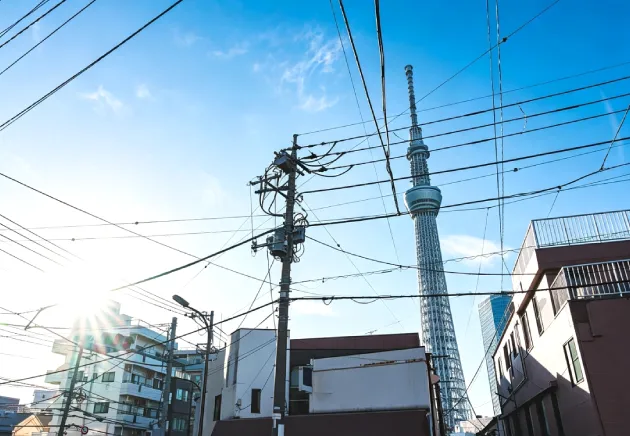
In our experience, the decision to choose a distribution transformer also depends on the power scale and actual application. If your project involves supplying power directly to end-users, managing multiple load fluctuation or distributing power within a medium or small area, a distribution transformer is likely a suitable choice.
Benefits of Using the Right Transformer
It’s important to choose the correct type of transformer, which could bring you long-term benefits.
Choosing the exact matching type have below three core benefits:
1. Economic benefit. Reduce unnecessary initial investment costs and maintain spending.
2. Achieve the highest energy level, lower the electricity losses.
3. Extend the transformer lifespan via avoiding exceeding the normal temperature when operating, and decelerating aging of insulation.
OMEK Power is a professional transformer manufacturer, can provide clients with targeted selection advise and customizable project solutions. We have more than 20 years experience in supplying power and distribution transformers. The product covers scenarios such as residential power supply, commercial buildings, small and medium-sized industries, urban power distribution, and small renewable energy systems. Our technical team will combine your load conditions, system specifications, and long-term planning to help you select the most suitable transformer, we will assist you realize the comprehensive benefits of the project.
FAQs
1. Is a power transformer AC or DC?
— Both input and output are AC.
2. How can you tell if a transformer is a power or distribution transformer?
— You can clarify them by below items:
Usage: Power transformer normally used for transporting high voltage electricity. Distribution is usually used for supply power for end users.
Specifications: The primary voltage of a power transformer is more than 35kV. The distribution’s primary voltage ranges from 1kV to 35kV.
Load design: The power transformer is designed for full load. And the distribution transformer is designed for frequent light load.
3. What is the difference between a current transformer and a distribution transformer?
A Current Transformer (CT) is measurement & protection device. It is used to reduce high current for metering and protection; it cannot supply power to loads.
A Distribution Transformer is power delivery equipment. It is used to step down medium voltage to low voltage for supplying power to end users.
OMEK Power provides reliable distribution transformers for global power distribution projects.
4. When compared with a power transformer, a distribution transformer has?
1) Lower voltage and smaller capacity.
2) Lower no-load loss for frequent light load, while power transformer has lower load loss for full load operating.
3) More compact and lightweight structure.
As a professional transformer manufacturer, OMEK Power supplies both power transformers and distribution transformers. Our technical team provides targeted selection advice to match your project.
5. What is the efficiency of power transformer vs distribution transformer?
The efficiency differs largely between the power and diatribution transformers, because their different load design and applications.
Power transformers are designed to operate continuously near full load. The designers focus on reducing their load loss. Thus, a power transformer performs best under heavy, steady loads.
Distribution transformers usually operate under light and fluctuating load conditions. The designers focus on reducing their no-load loss. Thus, a distribution transformer performs best under light loads.
OMEK Power tailor the transformer based on your actual usage, our technical team will help you select the suitest transformer type, so you could get better efficiency and lower operating costs in the long run.
6. Can a power transformer be used as a distribution transformer?
Technically speaking, do both power transformer and distribution can achieve electric transfer.
But actually, we don’t recommend to use a power transformer substitute a distribution transformer, because they have greatly difference as we have introduced in above content. Power transformer substitution will suffer ultra-high energy loss and economically inadvisiable due to its high purchase cost.
If you need, OMEK Power team can assist you to avoid this matter, choose correct transformer type for your project.
Conclusion
OMEK Power, a state-owned transformer manufacturer in China. We manufacture and supply a complete range of power transformer, distribution transformer and accessories over the world. Our transformers are widely used in the national grid, new energy projects, large or small to medium industrial projects, commercial power distribution projects, lighting systems, and more.
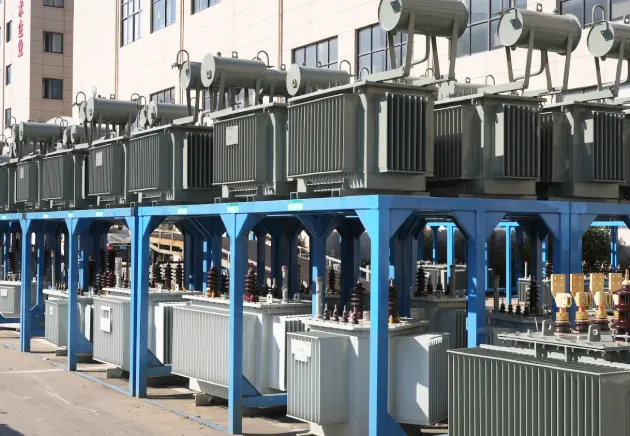
Incorrect transformer selection can increase the energy losses and reduce transformer’s service life. Thus, our engineer team provides customers with precise selection guidance throughout the process, helping to avoid wrong applications of power and distribution transformers, which will increase engineering losses or reduce equipment lifespan.
Therefore, if you are unsure which transformer model (power transformer or distribution transformer) fits your project, our OMEK engineering team is ready to assist you, please feel free to contact us!

Posted by Victoria leave words
Thanks for reading! Hope you enjoy this article. If you have any questions about this blog, please leave a comment below, or contact OMEK's online customer service. Looking forward to having in-depth communication with you!
Leave a Reply