

OMEK Railway Transformers
Railway transformers are special transformers designed for the railway power system. They consist of various subcategories and are applied to all fields of the railway industry.
OMEK is a leading transformer manufacturer with extensive experience in project delivery and product export. We can not only provide various types of high-quality railway transformers, but also capable of designing safe and stable solutions for our EPC partners. We can provide you with end-to-end support throughout your project design, procurement and construction phases, helping you reduce costs and increase efficiency.
Brief Introduction to Railway Transformers
Railway transformers do not refer to a single type of transformer. They are actually a general term for a series of transformers used in the railway system. There are several types of railway transformers based on their functions. They are all specifically designed for the railway power system.
Railway transformers are mainly used to regulate and stabilize the voltage of the railway network. They can deal with voltage fluctuations that come from current flow and load changes. In this way we can keep the power supply stable.

What Types of Transformers Do We Have?
OMEK railway transformers can be divided into the following four categories.
Railway Auxiliary Transformers
The railway auxiliary transformers are designed to power non-traction auxiliary operating equipment in the railway power system. They concentrate on railway operation scenarios, and are important to safeguard auxiliary systems like signalling, communication and lighting.
They are widely used in …
· Signaling systems
· Communication systems
· Control and monitoring systems
· Lighting systems
· Ventilation systems
· Air conditioning systems
· UPS systems
· Low-voltage distribution panels


Railway Auto Transformers
Railway auto transformers are designed to supply power to AT traction power supply systems. They do not supply power directly to equipment. Instead, they serve the traction power network.
What is the purpose of Auto Transformers?
➡️ Balance line voltage
➡️ Reduce voltage drop
➡️ Extend power supply distance
➡️ Reduce line losses
Railway Isolation Transformers
Railway isolation transformers are especially made to supply power to railway equipment. Their main function is to give electric isolation between primary voltage and secondary voltage, at the same time keep the power supply stable.
Functions:
Equipment and Personnel Protection
They can prevent high voltage transfer to the low voltage side by accident.
They can lower the risk of electric shock and minimize the impact of short circuit faults.
Anti-interference
The railway communication and signalling systems are extremely sensitive to electromagnetic interference. Isolation transformers can help reduce electric noise, voltage fluctuation and other disturbances.
Stable low voltage output
The fluctuation of output voltage is really small. This makes it a perfect choice for precision control equipment, UPS systems, and signalling control cabinets.


Railway Booster Transformers
They are used on the power supply lines of the railway. They are dedicated to raising voltage level and dealing with voltage drops.
Key point:
They do not supply power to the equipment directly. They operate through traction or auxiliary power lines to realize voltage boost. Thus they can give stable voltage to remote loads or branch lines.
Typical applications:
Branch lines / branch feeders: Compensate for voltage losses and maintain enough traction voltage.
Applied in autotransformer system: They can raise line voltage and optimize load distribution.
Stations and substations: They can help make line voltage stable and support downstream distribution systems (such as signaling and communication power supplies).
Railway Distribution Transformers
Railway distribution transformers are especially made for railway power distribution. Their main function is to convert medium voltage electrical energy into needed voltages.

Used in:
– Passenger stations and station buildings
– Lighting for waiting halls and platforms
– Air conditioning, ventilation systems, and elevatorsKey features:
✅ Able to work continuously and stably for a long time
✅ Typically three-phase configuration
Used in
– Railway depots
– Maintenance workshops
– Tools and lifting equipmentKey features
✅ A wide variety of load types
✅ A high proportion of mechanical equipment
✅ Higher resistance to impact and load fluctuations required
Used in
– Signaling systems
– Communication systems
– Control cabinets and UPS input powerKey features
✅ High requirements for voltage stability
✅ Low tolerance for electrical interference
✅ Commonly used with dual power supply systems
Custom Railway Transformer Solutions
OMEK provides full-scale custom railway transformer services, making sure that each transformer precisely fits the demand of customers.
· Connected Group Label: Dyn11, Yyn0, Yzn11
· Cooling Type: AN/AF (Dry type transformer), ONAN/ONAF (Oil immersed transformer)
· Load Capacity: ≤10000 kVA
· Voltage Level: 3-35 kV
· Energy Efficiency Class: Class 1, Class 2, Class 3
Capacity of the transformer is designed according to the actual load conditions in the station or equipment along the line.
We can choose various types of transformers in a rational combination as the solution. In this way we can optimize efficiency and lower overall energy consumption.

The products are designed for long-term operation in extremely hot, humid or dry environment, or in unstable grid conditions. We use low-loss iron core, optimized windings and efficient heat dissipation structure to prolong service life.

The product design complies with international standards like IEC 60076, ISO 9001, CE, ASTA. The insulation and grounding solutions can be adjusted to meet local regulations.
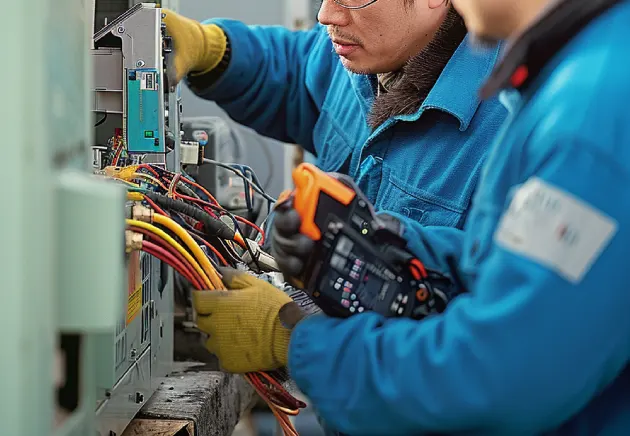
OMEK provides end-to-end support, from system design and manufacturing to installation and commissioning. Operational and maintenance training is also available to ensure long-term safe and stable transformer operation.

We provide a series of accesories including oil level indicator, gas relay, temperature control device, tap changer, neutral grounding resistor, cable terminal enclosure.
A Client Case from OMEK
Load Statistics of Power Consumers in a Standard Station Monitoring System in a Middle Eastern Country
| System / Equipment | Equipment Description | Total Capacity (kW) | Variable Frequency (VFD) | Load Category |
| Section System | Tunnel ventilation fan | 360 | No | Normal + Firefighting load |
| Track Area System | Exhaust fan | 110 | Yes | Normal + Firefighting load |
| Exhaust fan | 101 | No | Firefighting load | |
| Large System | Return air fan | 26 | Yes | Normal load |
| Fresh air fan | 2.2 | Yes | Normal load | |
| Combined air-conditioning unit | 60 | Yes | Normal load | |
| Exhaust fan | 76 | No | Firefighting load | |
| Small System | Exhaust fan | 7.8 | No | Normal load |
| Return air fan | 19.5 | No | Normal load | |
| Cabinet air conditioner | 30 | No | Normal load | |
| Air-conditioning water pump | 52 | Yes | Normal load | |
| Water System | Chilled water pump | 11 | Yes | Normal load |
| Chiller unit | 168 | No | Normal load | |
| VRV Air Conditioning System | Cooling-only type | 10 | Yes | Normal load |
| Cooling & heating type | 45 | Yes | Normal load | |
| Total | 1078.5 |
Metro Station Environmental Control System
The station environmental control system includes:
✅ Section tunnel ventilation system (Section System)
✅ Track area heat exhaust system (Track Exhaust System)
✅ Public area HVAC and smoke exhaust system (Large System)
✅ Equipment room HVAC and smoke exhaust system (Small System)
✅ Air-conditioning cooling source and water system (Water System)


Operating Conditions and Load Control
When the environmental control system operates, it faces different situations. This include cooling season, transitional season, and blockage or fire conditions. In the normal scenarios, the rules below are followed.
➡️ In regular circumstances, the section system is in idle. Only when the section blockage events happen will they be put into use.
➡️ The large system and water system are regulated through the combination of variable-frequency drives and automatic control strategies.
➡️ VRV air-conditioning systems consists of management rooms and equipment rooms.
Maximum Load Under Normal Operation
In the normal operation condition in the cooling season, excluding smoke exhaust systems and VRV systems, the maximum load is 846.5 kW.
Case Studies
- 1. Metro Station
- 2. Railway
Location: Bangkok, Thailand
There is a two-level underground island platform in the railway station.
The total area is about 11000 m². The place occupied by equipment takes about 70% of the total area. The equipment uses a lot of electricity. The power system thus faces great pressure. The system must be able to support all the key loads.
Challenges:
Thailand has a tropical monsoon climate. So it’s hot and humid in the station. What’s more, our clients have strict requirements on cost and electricity fees. We urgently need a good solution that is suitable to local conditions.
Solutions:
Choose the right size: We calculate the load in standard and peak conditions. By keeping the load rate within the range between 50%-90%, we can make the transformer run with the best efficiency.
Made for tropical climate: To address humidity, we use anti-corrosion materials. And the transformers are equipped with anti-condensation devices. This design use low loss silicon iron core and copper windings, this makes the no load loss lowered 20% and the noise below 50 dB.
Local compliance: We optimized insulation and ground connection design to fully meet local regulations. The products have passed the IEC60076 tests and fully comply with the local railway transport standards.
Location: Cairo, Egypt
This project involves the new electrified railway lines. There are many stations and equipment rooms underground or semi-underground. This equipment relies on railway auxiliary transformer to provide stable power for key systems.
What are the key systems? They are signalling system, communication system, lighting system, HVAC system, surveillance system and ticketing system. These together form the foundation of safe operation and reliable services.
Challenges:
- The hot dry climate makes it difficult to build underground infrastructures. The features of the local environment are dusty and the big day-night temperature difference.
- In some regions along the line, the voltage fluctuation is obvious. Long-term high temperature and sudden voltage peaks bring big tests to the quality of transformers.
- To reduce the risks and electricity costs in the long term, and to minimize procurement costs, we need a reliable and energy efficient auxiliary transformer solution. The solution should fit the local climate and conditions of the local power grid.
Solutions:
Match the right size: The capacity was determined according to load characteristics. The load rate keeps within 50%-90%.
Adapt to Operating Conditions: We use low loss silicon steel core and optimize copper windings. Heat dissipation structure was optimized and temperature control fans were added. The service life was prolonged.
Safety and environmental protection: The design was dustproof and heat resistant. It can also endure voltage fluctuation. All the products passed IEC tests and are certified to be used in railways in Egypt
Get A Quote
Looking for the right transformer for your railway project, or want a free railway transformer solution?
Tell us your needs, and our expert team will get back to you within 12 hours!


Why Choose OMEK
Because we focus on what really matters——
 Proven Experience You Can Trust
 Reliable Product Quality
 Global Service Capability
 Custom, One-Stop Solutions
 Strong Manufacturing Capacity
- 20 years in transformer industry, products shipped to 50+ countries. We know railway transformers inside out, miantain long-term cooperation with clients globally, and understand different standards and on-site needs. Plus, we can make and pack in a week. We cooperate with quick logistics. Everything we do is to keep your project on time.

- We use good materials to make our products. All the products will go through rigorous quality tests. Our products comply with international standards and have many certifications. We are confident about the quality of our products—they can operate safely, steadily and efficiently for many years. We don’t need to keep saying how great our products are. Our customers have already proven this through actions.

- We can provide services wherever you are. You will get: installation guidance, remote assistance, and on-site help. Our after-sales services is great- we’ll respond immediately to keep your project going smmothly and the equipment run reliably. We have a wonderful after-sales service team, and they are waiting to resolve any problems you have.

- From design to delivery, we handle it all. We will make customized transformers according to local standards and your project requirements. What’s more, we also provide complementary products. This means you don’t need to buy related products elsewhere, which can save your time and cut out all the hassle.
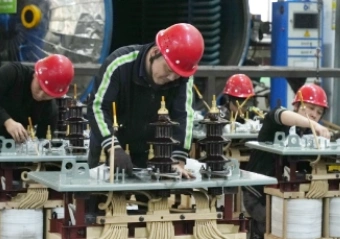
- We have two big production bases. Every year, over 15,000 units are produced from our factories. We have all the types and specifications you need. They are perfect for large projects and long-term cooperation. Our strong industrial chain ensures that we can provide any related products your projects need. This will save your time and energy.

Related Products




FAQ
Have any questions? We’re here to help you out.
Railways use more than one type of transformer, for example, traction transformers are used to supply power to electric trains. Besides traction transformers, railways also use a lot of distribution transformers and auxiliary transformers. These transformers supply power to station lighting, signaling systems, communication equipment, air-conditioning, elevators, and maintenance facilities. Though they can not move the train, they are still very important in railway systems.
Because 25 kV AC can transmit power over long distances while saving energy.
Higher voltage means lower current. Lower the current, less the heat. We don’t need the heat here, so it’s a thorough waste. Less heat means less losses in the cable. Railway lines are very long. If the voltage is too low, then the current will be strong. A lot of energy will be wasted before reaching the train.
25 kV keeps a good balance between safety, cost, and efficiency. This is why 25 kV is widely used in electrified railways.
The power that comes from the overhead line is usually around 25 kV. This voltage is too high for motors or onboard equipment to use. So, trains are equipped with onboard transformers that can lower voltages.
Usually the voltage of traction system is reduced to around 1–3 kV. Then it will further be reduced to 380 V or 220 V——these voltages are often found in our daily life.
A booster transformer is mainly used to deal with electrical interference.
In railway power systems, traction current can stray and interfere with nearby communication and signaling lines.
The booster transformer helps force the current to return along the intended path in order to reduce interference with signal systems.
It doesn’t power the train directly, but still plays an important role in safe operation. This is especially true in older or traditional railway systems.
The 80% rule is a practical advice, not a mandatory standard. The aim of the rule is to improve efficiency and expand service life of transformers.
According to the rule, the actual load of a transformer should be around 80% of the rated capacity. For example, the ideal load of a 1000 kva transformer should be 800 kva. If the actual load is too much higher or lower than that, the efficiency will go down.