

OMEK Power 3 Phase Copper Transformer
OMEK Power’s copper transformer is made with copper windings. Compared to transformers made with aluminum windings, copper transformer wins on many factors.
We take advantage of the copper materials for our transformer design. Our copper winding transformer has very low energy loss, good heat resisting performance. You will benefit a lot if you choose our copper wound transformer. You can save more cost and maintenance time since our copper transformer operates stably and very durable. By now, we have zero failures based on our clients’ feedback.
Below you can take a review of our copper transformer’s specifications.
- – Power Rating: 30kVA – 4000kVA
- – Winding Material: Copper
- – Number of Phase: 3 Phase
- – Cooling Type: ONAN, ONAF/OFAF, OFWF, AN/AF
- – Operating Temperature: Designed for optimal performance at 25°C
- – Energy Efficiency Level: Grade 1, 2, 3 (Customizable)
- – Certification: CE / IEC 60076 Compliant
- – Brand: OMEK Power
- – Country of Origin: China
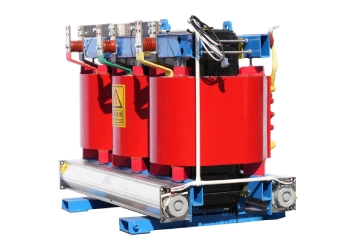
- 315 kva
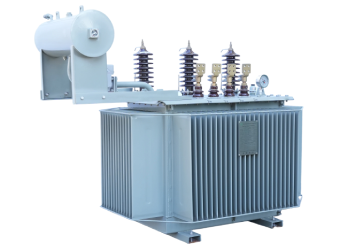
- 500 kva
| Items | Value |
| Rated capacity | 315 kVA |
| High voltage | 10 kV |
| Tap range | ±2×2.5% or ±5% |
| Low Voltage | 0.4 kV |
| Vector group | Dyn11, Yyn0, Yzn11 |
| No-load loss | 270 W |
| Load loss | 2760 W |
| No-load current | 0.16% |
| Energy Efficiency Level | Grade 1 |
| Items | Value |
| Rated capacity | 500 kVA |
| High voltage | 10 kV |
| Tap range | ±2×2.5% or ±5% |
| Low Voltage | 0.4 kV |
| Vector group | Dyn11, Yyn0, Yzn11 |
| No-load loss | 385 W |
| Load loss | 3900 W |
| No-load current | 0.16% |
| Energy Efficiency Level | Grade 1 |

Copper Winding Transformer Key Features

Copper winding transformer is more corrosion-resistant. Thus it makes longer usage.


Our copper transformer materials include round copper wire, rectangular copper wire, or copper foil. Copper foil helps make a high performance transformer. However, if you need other materials, we can also satisfy you.
We understand your application is unique. So we offer you full customization. We can customize for you in the following areas: transformer types (dry, oil, substation, pad mounted or pole mounted types), efficiency grades (grades 1, 2, 3 for chosen), enclosure protection grades, and other special needs.


Although copper’s cost is higher than aluminum. OMEK uses real copper material for manufacturing. Some transformer companies use other cheaper materials to replace the copper. Such transformers easily have problems. This is OMEK never does! Our copper wound transformer manufacturing process is open to our clients. Below is how our copper transformer’s come out.
Copper Transformer Manufacturing Process

There have our copper wire and copper foil’s incoming and outcoming records, quantity and models.

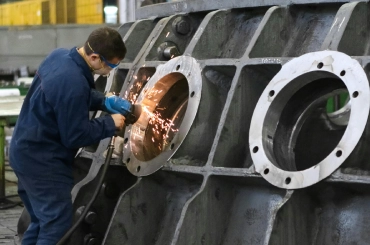
Vistors to our workshop will see how we assemble the copper windings and each step of our installation.

We do tests for each copper transformer. Clients will have our testing certification for their products.

Each finished copper transformer has specific copper coil coding and its own model number.
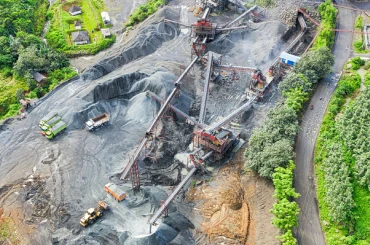
Copper Foil Transformer Applications



Related products





FAQs
Have any questions? We’re here to help you out.
There’re a lot of methods to reduce copper loss. OMEK is always on research and innovation for lower copper loss transformers. The following methods are what OMEK does to reduce copper loss in transformers.
1) Adopts oxygen-free copper these new materials. These materials have lower loss and resistivity . They have a low cost and strong corrosion resistance. They are convenient for obtaining. It has a good energy-saving effect. It can effectively reduce the internal resistance of the windings of distribution transformers. Enhance the short-circuit resistance of transformers. Achieve the goal of energy conservation and consumption reduction.
2) Adopt an internally shielded winding. This method can effectively reduce the volume of transformers and lower their energy consumption.
3) Per scientic theoretical calculation, OMEK ensures the insulation structure of the transformer, adopts advanced new technic. Properly narrow the sizes of the insulations, reduce the dimention of the copper conductor, changing the working parameters of the circuit. This can effectively reduce the AC resistance of the windings.
Copper and aluminium transformers’ differences are major in their winding materials – copper and aluminium.
Copper and aluminium have their own characteristics. They vary in their conductive ability, heat resistant performance, anti-rust feature as well as their prices.
In the aspects mentioned above, copper material wins. So the transformers used copper windings (copper transformer) always have lower losses and higher tolerance ability to short circuit impact. Regarding the costs, though the copper transformer’s price is higher than the aluminium transformer, it saves more in the long run. Because the copper transformer rarely has issues, the later maintenance costs can be saved. That’s the aluminium transformer can’t achieve.
Although copper wire is more expensive than aluminum wire, its overall maintenance cost is lower and it requires almost no manual maintenance.
Secondly, copper wire has strong chemical stability and is not prone to oxidation. The connection is reliable. Among conductive materials with the same performance, the cross-sectional area of copper wire is smaller. Using copper as the winding material for transformers results in a smaller overall transformer volume, saving installation space.
Another prominent advantage is that copper transformers have stronger short-circuit resistance, and their dynamic and thermal stability are also stronger. The joints of aluminum wire are prone to oxidation, which can lead to poor contact, resulting in a large contact resistance and easy to be burned out.
Of course, it is not said that aluminum wire cannot be used for transformers. As long as this issue is paid attention to in electromagnetic calculations and structural design, its dynamic and thermal stability performance can still be guaranteed.
Copper loss refers to the loss caused by the resistance of the transformer when the primary and secondary currents flow through the transformer windings. Since the windings of transformers are usually made of copper wires, it is called copper loss.
Copper loss, also known as copper consumption, is a load loss, which is proportional to the square of the load current. When a transformer is wound, a large amount of copper wires are required. These copper wires themselves have resistance. When the transformer is under rated load, these resistances will consume a certain amount of power and be converted into heat when current flows through them. This part of the loss is copper loss.
Iron loss refers to the energy consumption of the core in the magnetic circuit of a transformer under rated voltage (secondary open circuit), which is simply called iron loss. Iron loss, also known as iron consumption, is the no-load loss.
Its magnitude is related to the primary voltage of the transformer and has nothing to do with whether the secondary side of the transformer is no-load. The value of iron loss remains basically unchanged. Iron loss is specifically divided into eddy current loss, hysteresis loss, additional iron loss and other parts.
Among them, eddy current loss and hysteresis loss are related to the core material of the transformer itself.