
How to Size a Transformer | More Than Just a kVA Calculation
For some electricians and transformer purchasers, when selecting the capacity of a transformer, they always add up the power of all the equipment, and regard the total power as the correct size.
However, this approach either leads to the burning out of the transformer or, in the long run, a considerable waste of funds.
This article will guide you on how to size a transformer in a scientific way, helping you ensure a safe operation, reduce transformer losses and increase economic benefits.
A Closer Look at Transformer Capacity
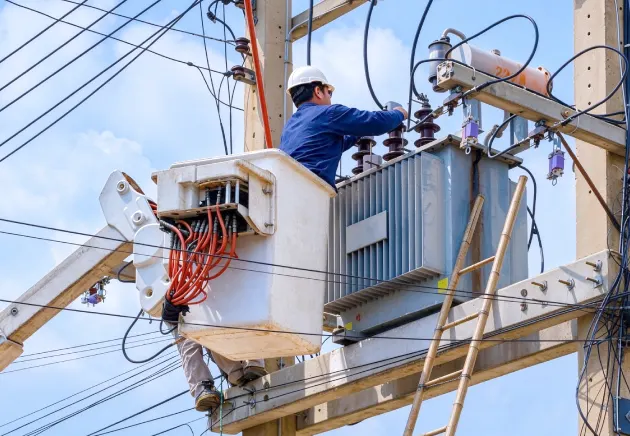
If you want to determine the kVA correctly, first you need to know clearly – what is the capacity of the transformer?
In simple terms, a transformer is a device that changes voltage and supplies power to a load. The amount of electricity supplied to the load gives rise to the concept of transformer capacity. It can be said, the size of a transformer’s capacity determines how much load it can carry, that is, the upper limit of the transformer’s load.
If you selected the appropriate size, congratulations, the subsequent operation will be much easier for you, and the entire power grid system will be very stable and smooth. However, if the size of the transformer you selected is not appropriate, either too small or too large, there’s risk of being discontinued.
You may be interested in our article – Why Transformers Are Rated in kVA?
How to Calculate the kVA?
Let’s see how to calculate the kVA for both single and three phase transformer. It’s very easy by following the steps below.
Step 1 Determine the Voltage (kV or V) And Current (Amps)
1) Check the nameplates of the equipment and locate its voltage and current. Determine the voltage and current for each equipment needs to be powered. If there are a lot, list them all.
2) Fill in the following chart as below with the voltages and current you found.
| Equipment Name | Voltage (e.g) | Current (e.g) |
|---|---|---|
| Equipment A | 220V | 315A |
| Equipment B | 220V | 450A |
| Equipment C | 220V | 1060A |
Step 2 Use the kVA Calculator to Get the kVA
Now you have got the voltages and current of all your equipment. Use the below transformer sizing calculator to get the apparent power for each equipment.
1) For a single phase distribution transformer, use the 1 phase kVA calculator. Fill in the Apparent Power blanks as below.

| Equipment Name | Voltage | Current | kW Calculator | Apparent Power (kVA) |
|---|---|---|---|---|
| Equipment A | 220V | 315A | (220V × 315A) ÷ 1000 | 69.3 |
| Equipment B | 220V | 450A | (220V × 450A) ÷ 1000 | 99 |
| Equipment C | 220V | 1060A | (220V × 1060A) ÷ 1000 | 233.2 |
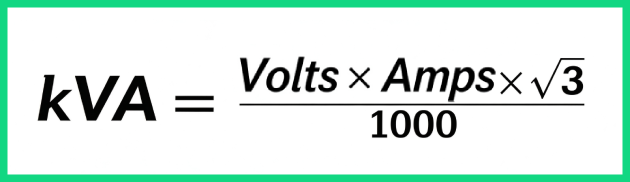
2) For a three phase distribution transformer, use the 3 phase kVA calculator. Fill in the Apparent Power blanks as below.
| Equipment Name | Voltage | Current | kW calculator | Apparent power (kVA) |
|---|---|---|---|---|
| Equipment A | 600V | 833A | (600V × 833A × √3) ÷ 1000 | ≈ 866 |
| Equipment B | 480V | 670A | (480V × 670A × √3) ÷ 1000 | ≈ 557 |
| Equipment C | 240V | 510A | (240V × 510A × √3) ÷ 1000 | ≈ 212 |
Step 3 Calculate the Total Apparent Power (kVA)
For the single phase distribution transformer, we got a total of 401.5 kVA; for the three phase distribution transformer, we got a total of 1,635 kVA.
| Single Phase Distribution Transformer | ||||
|---|---|---|---|---|
| Equipment Name | Voltage | Current | kW Calculator | Apparent Power (kVA) |
| Equipment A | 220V | 315A | (220V × 315A) ÷ 1000 | 69.3 kVA |
| Equipment B | 220V | 450A | (220V × 450A) ÷ 1000 | 99 kVA |
| Equipment C | 220V | 1060A | (220V × 1060A) ÷ 1000 | 233.2 kVA |
| Total | – | – | – | 401.5 kVA |
| Three Phase Distribution Transformer | ||||
| Equipment Name | Voltage | Current | kW Calculator | Apparent Power (kVA) |
| Equipment A | 600V | 833A | (600V × 833A × √3) ÷ 1000 | ≈ 866 kVA |
| Equipment B | 480V | 670A | (480V × 670A × √3) ÷ 1000 | ≈ 557 kVA |
| Equipment C | 240V | 510A | (240V × 510A × √3) ÷ 1000 | ≈ 212 kVA |
| Total | – | – | – | ≈ 1635 kVA |
Kindly Reminder:
What we have just calculated is the apparent power of the transformer. Although the the apparent power is the most crucial basis to choose the transformer sizes, this does not mean we should purchase the transformer based on this figure.
How to Determine Transformer Capacity kVA?
OMEK Power engineers suggest that, when sizing a transformer, in addition to knowing the total load, three important aspects should also be considered.
Among the following three aspects, you may have already taken the first two into account, very good! However, based on OMEK Power‘s years of experience in selecting sizes for customers, the third aspect – use economic capacity method – is equally important!
Item 1. Standard Transformer Sizes
The capacity of a transformer is customized according to a certain standard capacity sequence. The specific load capacity calculated is highly likely not the standard range.
For instance, the capacity of the three-phase transformer we just calculated above is 1,635 kVA, but it is not a standard capacity. We can only select the nearest standard capacity of 2,000 kVA upwards.
You can refer to a part of standard transformer sizes as table listed below from China OMEK Power Company.
S14-M-(30-2500)/10 3 Phase Oil-immersed Distribution Transformer
| Rated capacity (kVA) | Voltage combination | Connected group label | No-load loss (W) | Load loss (75℃)(W) | No-load current (%) | Impedance voltage (%) | Overall dimension (L×w×h) | Total weight (kg) | ||
|---|---|---|---|---|---|---|---|---|---|---|
| High voltage (kV) | tap range | Low Voltage (kV) | ||||||||
| 30 | 6 6.3 6.6 10 10.5 11 | ±2×2.5 ±5 | 0.4 | Dyn11 Yyn0 Yzn11 | 80 | 505/480 | 1.5 | 4 | 785×710×880 | 370 |
| 50 | 100 | 730/695 | 1.3 | 800×730×940 | 480 | |||||
| 63 | 110 | 87/830 | 1.2 | 815×720×970 | 535 | |||||
| 80 | 130 | 1050/1000 | 1.2 | 830×740×990 | 580 | |||||
| 100 | 150 | 1260/1200 | 1.1 | 875×790×1010 | 705 | |||||
| 125 | 170 | 1510/1440 | 1.1 | 875×770×1050 | 775 | |||||
| 160 | 200 | 1850/1760 | 1.0 | 935×820×1140 | 975 | |||||
| 200 | 240 | 2180/2080 | 1.0 | 995×870×1140 | 1140 | |||||
| 250 | 290 | 2560/2440 | 0.9 | 995×900×1180 | 1240 | |||||
| 315 | 340 | 3060/2920 | 0.9 | 1030×880×1250 | 1425 | |||||
| 400 | Dyn11 Yyn0 | 410 | 3610/3440 | 0.8 | 4.5 | 1075×910×1270 | 1635 | |||
| 500 | 480 | 4330/4120 | 0.8 | 1120×930×1320 | 1950 | |||||
| 630 | 570 | 4960 | 0.6 | 1165×950×1350 | 2150 | |||||
| 800 | 700 | 6000 | 0.6 | 1210×1050×1390 | 2515 | |||||
| 1000 | 830 | 8240 | 0.6 | 1520×1020×1450 | 2635 | |||||
| 1250 | 970 | 9600 | 0.5 | 1630×1090×1540 | 3210 | |||||
| 1600 | 1170 | 11600 | 0.5 | 1680×1150×1600 | 3905 | |||||
| 2000 | 1550 | 14600 | 0.4 | 5 | 1890×1300×1600 | 4130 | ||||
| 2500 | 1830 | 16900 | 0.4 | 1990×1360×1700 | 5250 | |||||
2. Reserve Space for Expansion
If your apparent power is 1,800 kVA, would you choose a 2,000 kVA transformer?
Its answer is not unique. Because you need to consider whether there are expansion plans for your project in the future and the scale of the expansion. If you have a large-scale expansion plan in the future but only choose a 2,000 kVA size, the transformer will soon be fully loaded and you may have to replace it in advance.
So, in this case, the select transformer size needs to be determined in combination with your project planning and the expected load increment.
3. Use Economic Capacity Method
We have been discussing the utilization rate of transformer capacity in the above chapters. Now, let’s talk about why we also need to consider the long term operating efficiency and ROI of transformers.
Generally, the size selected based on load requirements contentment is smaller, while the size selected based on economic operation is larger. How to size the transformer under these two different selection results?
The method to size, OMEK suggests, is to select based on the latter – the economic capacity method, which means that it is more important to consider the comprehensive loss, procurement cost, electricity expense and ROI. For the economic capacity method, although the selected capacity is large and the investment in the transformer will increase, but it will reduce reactive power loss and active power loss, and accordingly reduce the investment in power capacitors and the operating cost of the transformer.
Finally, calculate the payback period for the increased investment cost due to the increase in transformer capacity, and determine the optimal size of the transformer based on the investment payback period.
Examples for Your Easy Understanding
In a 35 kV substation, the average annual load of a single unit transformer is 1,682 kW, the power factor is 0.9, the maximum annual load is 2,185 kW, the annual operating time T = 350 × 24 = 8400 h, and the power supply voltage is 35/6 kV.
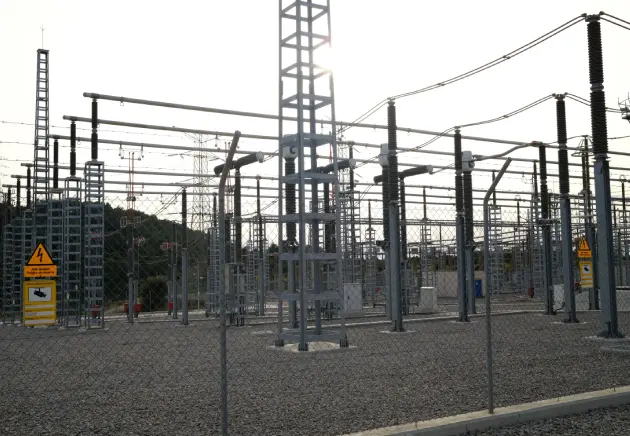
In this conditon, the required transformer capacity is Sn = 2185/0.9 = 2482 kVA. To meet the load requirements, you can size a 2500 kVA transformer. And if you consider a backup, you can size a 3150 kVA transformer. However, in the end, this substation selected a 4000 kVA transformers as the most cost-effective choice. You may not believe it. Why on earth is this? Don’t worry. Please keep reading the analysis by OMEK engineers.
From the perspective of economic operation, OMEK conducted an analysis and comparison of larger capacity transformers. Our engineers also calculated the annual energy loss of those transformers. In this example, RT% = 1682/2185 = 77%, from this, the load fluctuation loss coefficient KT = 1.06.
Taking a 2500 kVA transformer as the base value, we calculated the active power loss ΔAP and reactive power loss of six types of our S9 series oil filled transformers with capacities ranging from 2,500 to 8,000 kVA.
In the above formulas,
P0 —— No-load active power loss, kW;
PK —— Load active power loss, kW;
β —— Average load factor, β = S / Sn;
Q0 —— No-load reactive power loss, kvar;
QK —— Load reactive power loss, kvar.
In this formula: I0 —— The percentage of no-load current of the transformer, %.
In this formula: Uk —— Transformer short-circuit voltage percentage value, %.
Table 1 Technical parameters and calculation results of six S9 series distribution transformer
| parameter | Transformer rated capacity Sn (kVA) | |||||
|---|---|---|---|---|---|---|
| 2500 kVA | 3150 kVA | 4000 kVA | 5000 kVA | 6300 kVA | 8000 kVA | |
| PO (kW) | 4 | 4.75 | 5.65 | 6.75 | 8.2 | 11.5 |
| PK (kW) | 23 | 27 | 32 | 36.7 | 41 | 45 |
| IO (%) | 1.1 | 1 | 1 | 0.9 | 0.9 | 0.8 |
| UK (%) | 6.5 | 7 | 7 | 7 | 7.5 | 7.5 |
| QO (kvar) | 27.5 | 31.5 | 40 | 50 | 56.7 | 64 |
| QK (kvar) | 162.5 | 220.5 | 280 | 350 | 472.5 | 600 |
| β | 0.75 | 0.59 | 0.47 | 0.37 | 0.3 | 0.23 |
| ΔAP () | 148046 | 124524 | 109659 | 102354 | 101006 | 110009 |
| ΔAQ () | 1039585 | 955698 | 880240 | 813392 | 846511 | 879033 |
According to Table 1, a 6300 kVA transformer should be selected since it has the minimum active power loss, and a 5000 kVA transformer should be chosen since it has the minimum reactive power loss. However, considering the 3150 kVA and 4000 kVA transformers have relatively small investment, so they can also be within the selection range. Therefore, taking the 2,500 kVA transformer as the benchmark, we should calculate the payback periods for the increased investment on the 3150 kVA, 4000 kVA, 5000 kVA and 6300 kVA transformers respectively.
Suppose the investment in a transformer of 2500 kVA is 160,000 RMB, 3150 kVA is 178,000 RMB, 4000 kVA is 218,000 RMB, 5000 kVA is 250,000 RMB, and 6300 kVA is 300,000 RMB. The price of the capacitor is 200 RMB/kvar, and the electricity price is 0.4 RMB/kW · h.
Based on the above data, the 3150 kVA transformer requires 18,000 RMB more investment than the 2500 kVA transformer: ΔZB = 178000 − 160000 = 18000 (CNY). The investment in capacitors is reduced 1,997 CNY due to the reactive power saving:
Zc = (1039585 − 955698) / 8400 × 200 = 1997 (CNY)
Ultimately, net increase in investment:
ΔZ = 18000 − 1997 = 16003 (CNY)
Annual electricity bill savings
Gd = (148046 − 124524) × 0.4 = 9409 (CNY)
Per calculation, the payback period of the 3150 kVA transformer is 1.7 years longer than that of the 2,500 kVA transformer: TB = 16003 / 9409 = 1.7 (a).
Similarly, the payback period of the 4000 kVA, 5000 kVA and 6300 kVA transformers compared to the 2500 kVA transformer are listed below (see Table 2).
3150~6300 kVA transformers compared to 2500 kVA transformer:
Table 2 Electricity saving and payback period of increased investment of four types of transformers
| Sn (kVA) | ΔΔAP (kW·h) | ΔΔAQ (kW·h) | ΔΔAZ (kW·h) | TB (a) |
|---|---|---|---|---|
| 3150 | 23522 | 83887 | 31911 | 1.7 |
| 4000 | 38387 | 159345 | 54322 | 3.5 |
| 5000 | 45692 | 226193 | 68311 | 4.6 |
| 6300 | 47040 | 199074 | 66347 | 7.2 |
According to Table 2, considering investment benefits, we should size a 4000 kVA or 5000 kVA transformer. The annual comprehensive electricity savings are 54,000 and 68,000 kW·h respectively, equivalent to 21,600 to 27,200 RMB, and the investment payback period is increased by 3.5 and 4.6 years.
Size a Transformer Procedure
1. Meet the load safety requirements firstly
Do not simply add up the kW of the equipment to determine the kVA of the transformer. You also need to consider the power factor.
2. Reserve space for future loads
If your workshop has a clear expansion plan and there is a probability of adding new equipment, you can choose a transformer with a relatively larger capacity. This way, there is no need to carry out secondary renovations and replacements of the transformer in the short term. It helps reduce construction costs.
3. Calculate the payback period using the economic capacity method
After meeting the requirements of load safety, do not determine the minimum sufficient capacity directly. You can size two larger capacities further up, and calculate the annual savings in electricity consumption and the payback period for the increased investment. Choose the plan with a shorter payback period because it saves more.

4. Avoid the two extremes
Small capacity is cost-effective in initial investment, but it is with high loss and maybe shortened lifespan. Also, do not size a transformer with a very large capacity either. Long-term light-load operation will lead to continuous waste of no-load loss, and the investment will not be recovered.
Summary
From the above analysis, it can be seen that when sizing a transformer, meeting the load requirement and keeping a certain capacity as a reserve may lead to higher cost and loss. Besides, select a larger capacity with no basis is also uneconomical.
When renovating the power grid or building new substations, sizing a transformer should be based on economic capacity. Although this will increase the capacity of the transformer and the one-time investment, it will reduce the line loss of the power grid and increase its long-term benefits.
At the same time, due to the increase in the capacity-load ratio of the power grid, the reliability of power supply is improved, and it makes for meeting the need to increase the load in the power grid in the future.
Any questions, contact us, we are glad to help!

Posted by Victoria leave words
Thanks for reading! Hope you enjoy this article. If you have any questions about this blog, please leave a comment below, or contact OMEK's online customer service. Looking forward to having in-depth communication with you!
Leave a Reply