
Amorphous Core vs Silicon Steel: Structure, Loss & Design Comparison
At present, the core of the distribution transformers used in urban and rural power grids is basically made of cold-rolled oriented silicon steel sheets.
This type of silicon steel core transformer will continue to consume electricity and generate heat as long as it is connected to power, even if there is no load at the back end. Thus, the standby loss is relatively high.
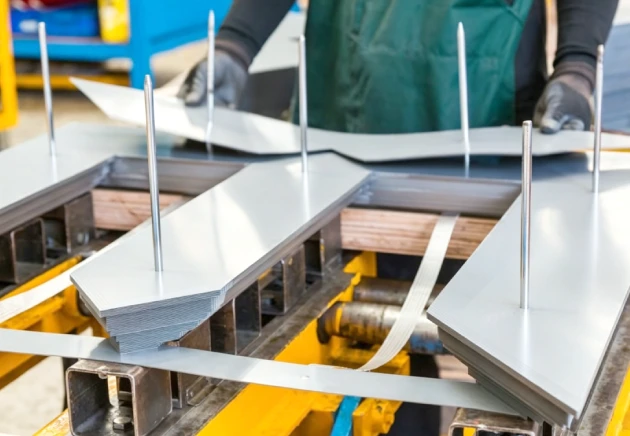
However, for amorphous alloy transformers, the core uses a new type of amorphous alloy material. Compared with ordinary silicon steel core transformers, its no-load power consumption after being powered on is significantly reduced.
To reduce the energy consumption of transformers and enhance their operational efficiency, the most crucial improvement ideas lie in two points:
▪️ First, replace them with higher-quality magnetic core materials;
▪️ Second, optimize the internal structure of the core and coil to fully develop the advantages of new materials such as high magnetic permeability and low loss. Long-term use can save a significant amount of electricity costs and achieve better economic benefits.
What is Amorphous Alloy?
The metals we commonly seen in daily life are all crystalline materials. Their physical state is that the atoms in the metal are arranged into crystals according to certain rules. Amorphous alloy materials have atoms arranged in an irregular crystal pattern inside. When metals are heated and melted, the internal atoms become active and cool rapidly. The atoms do not have time to arrange and crystallize regularly, resulting in what is called amorphous alloys.
Amorphous alloys mainly employ super-quenching and rapid quenching techniques, featuring long-range disordered free internal atoms without any grains or grain boundaries, which do not affect the movement of magnetic domains. This amorphous alloy possesses many unique physical properties, such as excellent soft magnetic properties, high corrosion resistance, and high mechanical strength.
How Do Amorphous Alloys Improve the Efficiency of Power Transformers?
Amorphous alloy materials processed and manufactured through methods such as ultra-rapid cooling and solidification have no lattice or grain boundaries, low eddy current loss, and good temperature stability.
(2) Due to the short-range ordered distribution of atoms and weak coercive force in amorphous alloys, magnetic domain ionization is not affected. Therefore, the hysteresis loss performance of amorphous alloys is far superior to that of silicon steel sheets.
(3) The magneto strictive degree of amorphous alloys is higher than that of oriented silicon steel. At present, the theoretical thermal noise control index of amorphous alloy core transformers is much higher than that of ordinary silicon steel transformers. Through the design optimization and structural adjustment of the overall structure characteristics of this series of transformers, appropriate processing technologies and advanced assembly techniques are adopted, and physical noise reduction methods such as buffering are added. The noise level can reach or even be lower than that of silicon steel sheet core transformers.
Amorphous Core vs Silicon Steel
Structural Characteristics
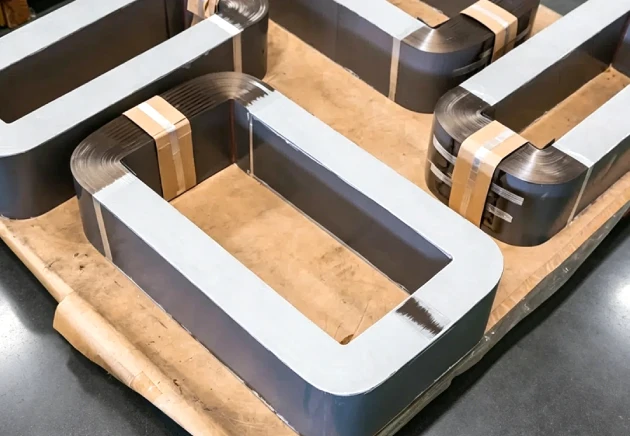
The core segments of amorphous alloy transformers are usually rectangular, while the primary and secondary windings are processed into rounded rectangles, which enhances the reliability and utilization rate of the wires. Compared with the traditional multi-layer circular cross-section core, it not only effectively saves a large amount of materials required for the core and transformer electromagnetic coils, but also greatly improves the filling rate of the oil tank.
Types of Amorphous Alloy Cores
The structure of amorphous alloy cores can be classified into five types: superimposed ring type, single ring type, air gap distribution type, superimposed plate type and butt joint type.
Core Connection Method
The commonly used connection method for cores is the best choice that comprehensively considers factors such as core stress, core strength, core fixing structure, and windings. However, the docking type has an additional docking length, both upward and downward docking. The material utilization rate of the docking structure is not high. Increasing the thickness of the core will lead to an increase in the size of the oil tank and the weight of the oil.
Typical Core Configuration
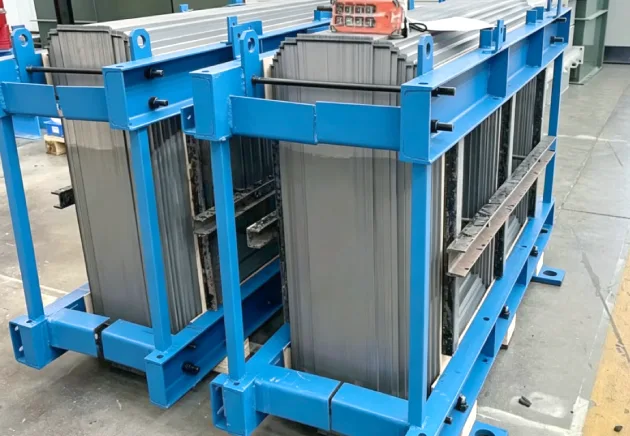
The core structure of amorphous alloy transformers is generally three-phase five-column. It consists of four single-coil magnetic cores and two side coils.
Structural Design
Amorphous alloy transformers do not use amorphous alloys as the main structural support components, but instead adopt a winding contraction system to reduce the compression of the core by the windings and the transformer.
Core Cross-Section Characteristics
Under the same capacity, the cross-sectional area of amorphous alloy cores is larger than that of silicon steel transformer cores. This is mainly because the working magnetic density of amorphous alloy strips is lower than that of silicon steel sheets.
Winding Geometry Comparison
Under the same cross-sectional conditions, the circumference of a rectangle is greater than that of a circle. Therefore, the main slot circumference of the high and low voltage windings of a silicon steel core transformer with the same capacity is smaller than that of an amorphous alloy transformer.
Insulation Requirements
Under the maximum insulation requirement level stipulated in the product performance quality assurance standard, the maximum rated main insulation distance of amorphous alloy transformers shall not exceed that of silicon steel transformers.
Amorphous Core Transformer Design
When choosing amorphous alloy transformers, energy conservation is mainly achieved by reducing the no-load loss of the transformer. Therefore, reducing the no-load loss of amorphous alloy transformers is the most important issue to be considered when designing non-alloy transformers. Due to the many inherent properties of amorphous alloys, the following aspects need to be considered when designing and manufacturing amorphous alloy materials:
(1) To minimize the shearing and usage of the core, the core of the entire product is composed of four independent core frames, and each phase of the winding is set in a magnetic circuit independent of the two frames.
(2) Considering that the thickness of each piece of amorphous alloy is relatively thin and the surface of the amorphous alloy material is not smooth enough, there is no overly high requirement for the filling coefficient of the core used in its transformer.
(3) Amorphous alloy materials have excellent low-loss performance and good hot air heat dissipation performance. After annealing, amorphous alloy materials will achieve better low-loss performance.
(4) Amorphous alloy materials have high hardness and are not easily cut by common cutting tools. When designing and using this amorphous alloy material, the cutting volume should be reduced as much as possible.
(5) Amorphous alloy materials have strong mechanical stress induction. When designing their structure and selecting supporting structural components, it is advisable to avoid using iron cores as much as possible.

Posted by Victoria leave words
Thanks for reading! Hope you enjoy this article. If you have any questions about this blog, please leave a comment below, or contact OMEK's online customer service. Looking forward to having in-depth communication with you!
Leave a Reply